Core Technology
CORE TECHNOLOGIES
핵심 기술
Engineering the Air. Powering the Future of Flight.
공기의 흐름을 기술로 완성하여 더 나은 비행 경험을 만듭니다.
The core of a wind tunnel is not just about generating strong winds, but about how to maintain stable, uniform, controllable, and sustained high-speed airflow within the flight area.
Based on the experience accumulated by pilots in independent research and development, design, manufacturing, and actual venue operation of entertainment wind tunnels, we integrate aerodynamic technology, circulating air duct design, power systems, intelligent control, safety systems, and venue engineering to provide a complete wind tunnel technology solution for indoor skydiving experience, professional training, and commercial operation. The official website of Feijia describes the entertainment wind tunnel as using aerodynamic principles to artificially generate and control airflow, allowing users to achieve flight in specific spaces; Its public information also shows that the company has long been involved in the research and development, manufacturing, and actual venue operation of wind tunnel equipment.
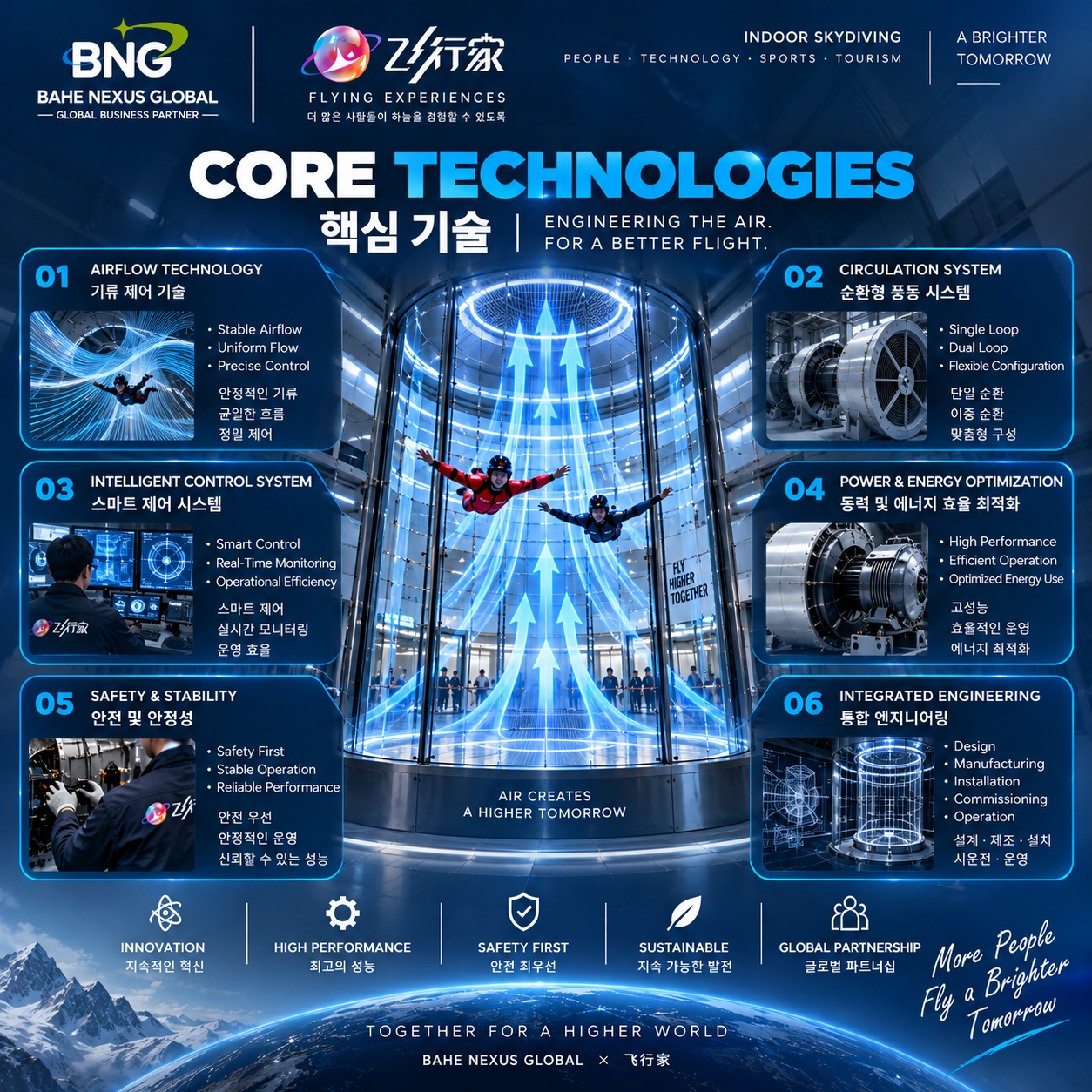
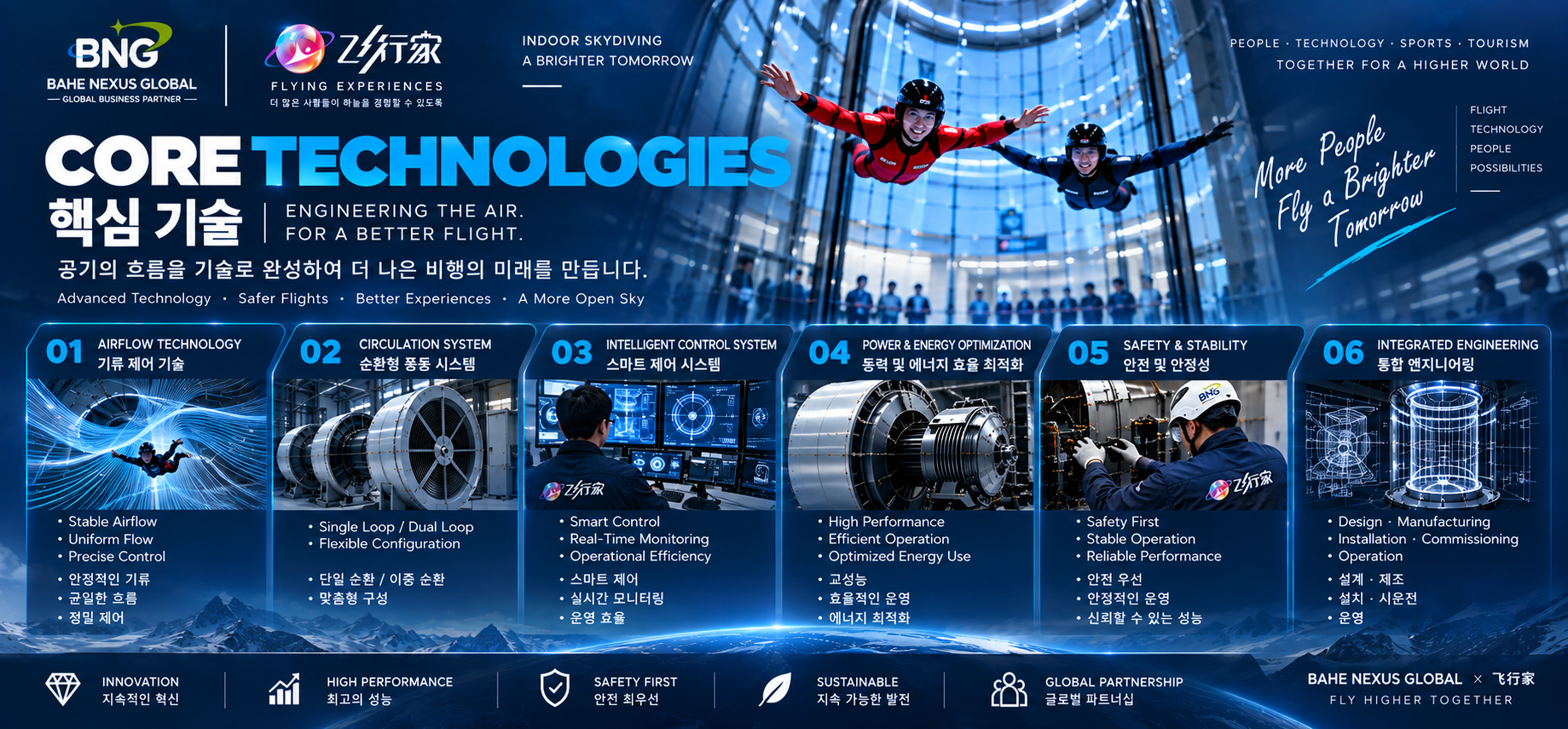
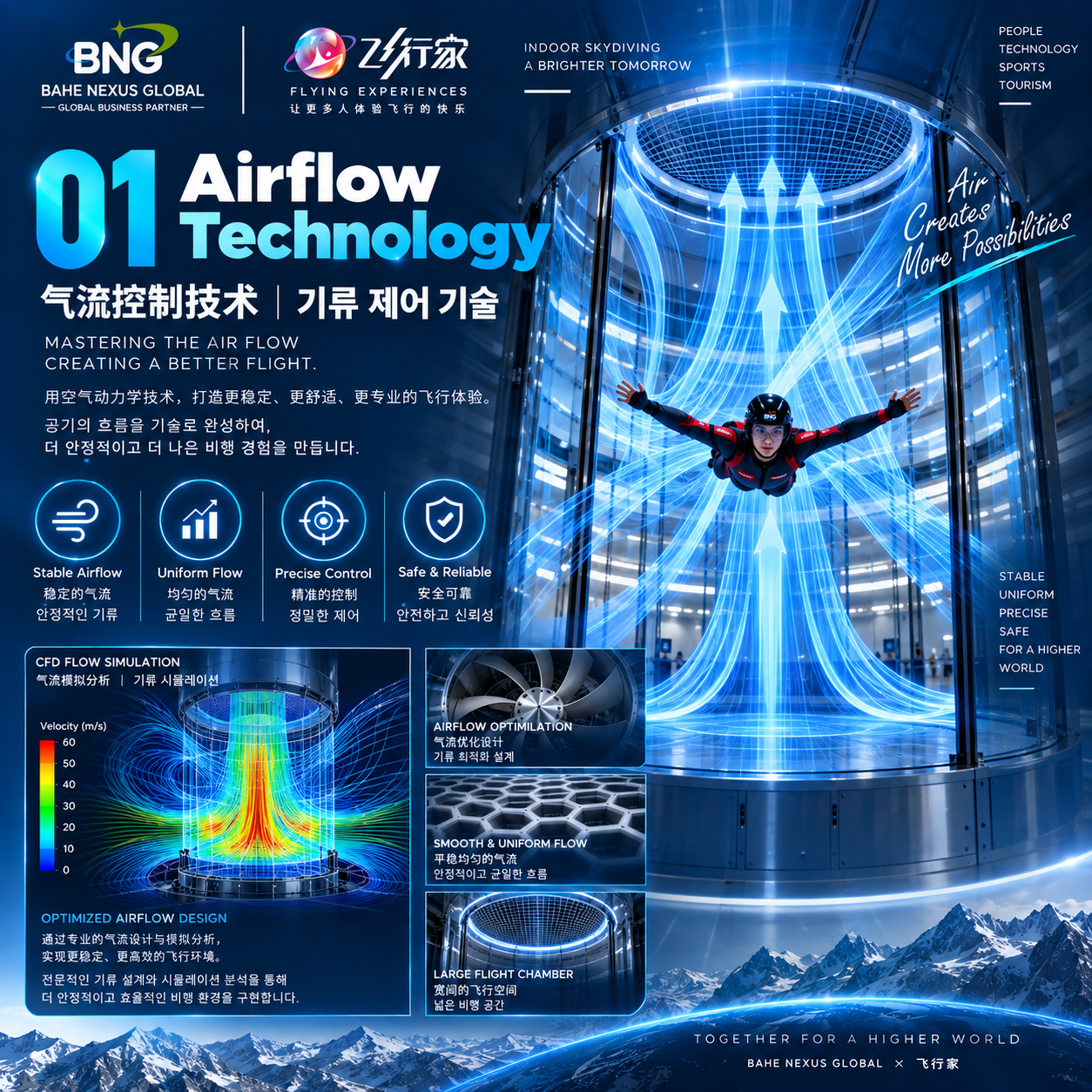
01|Airflow Technology
Airflow control technology ·동류제ー숅
A stable airflow environment is the core of the vertical wind tunnel flight experience.
Through the collaborative design of air duct structure, power system, and airflow organization, the airflow in the flight area is continuously controlled and optimized, providing a more stable and continuous flight environment for experiencers and professional pilots.
Stable Airflow · Uniform Flow · Precise Control
안정적인 기류 · 균일한 흐름 · 정밀 제어
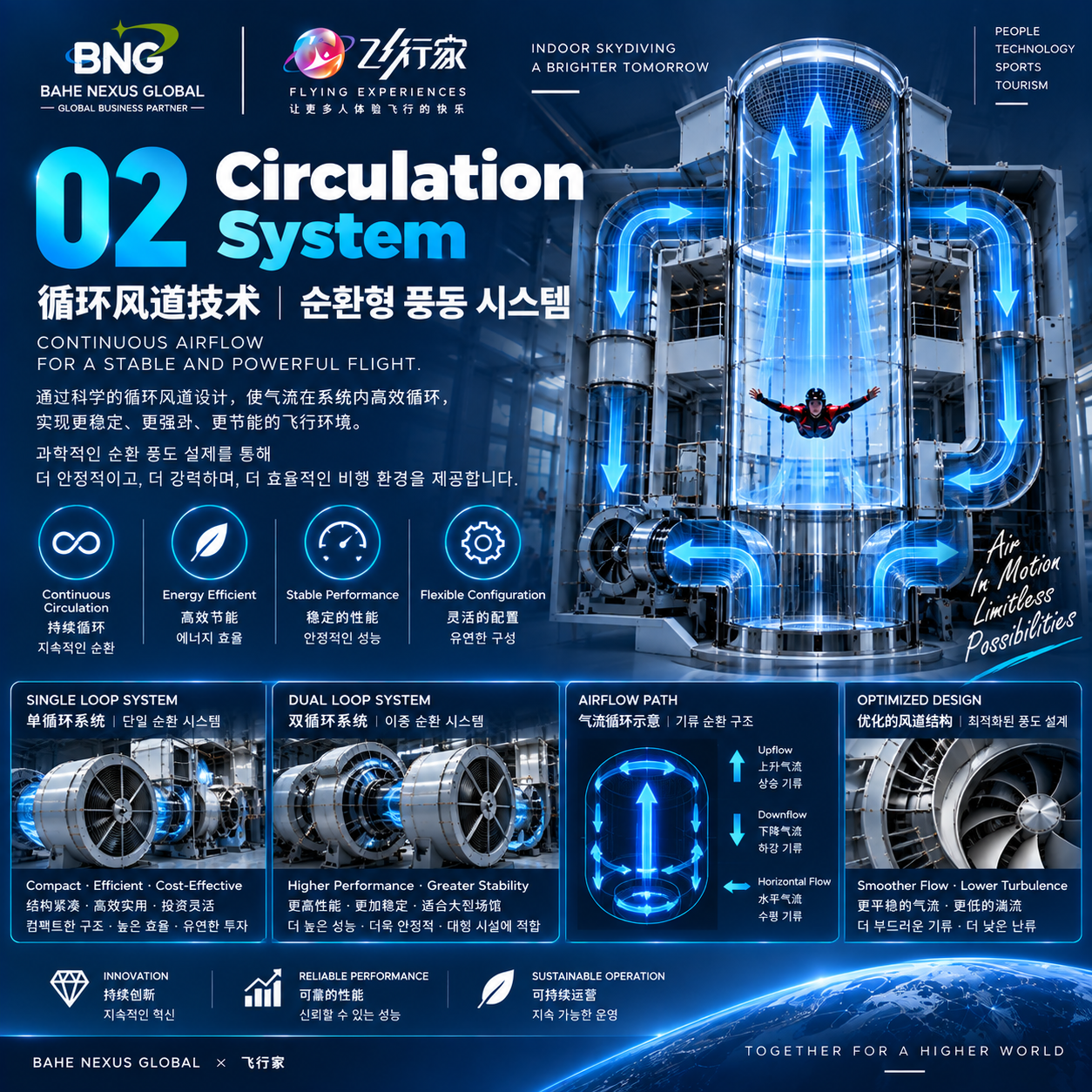
02|Circulation System
Circulating air duct technology
Wind tunnel solutions with different specifications and circulation structures can be adopted for different venue sizes, investment models, and operational needs.
The product system currently publicly displayed by Feijia includes single cycle 2.4-meter, single cycle 3.0-meter, and dual cycle 4.3-meter, 5.0-meter products, allowing projects to choose corresponding solutions based on experiential, training, or large commercial venue needs.
Single Loop · Dual Loop · Flexible Configuration
단일 순환 · 이중 순환 · 맞춤형 구성
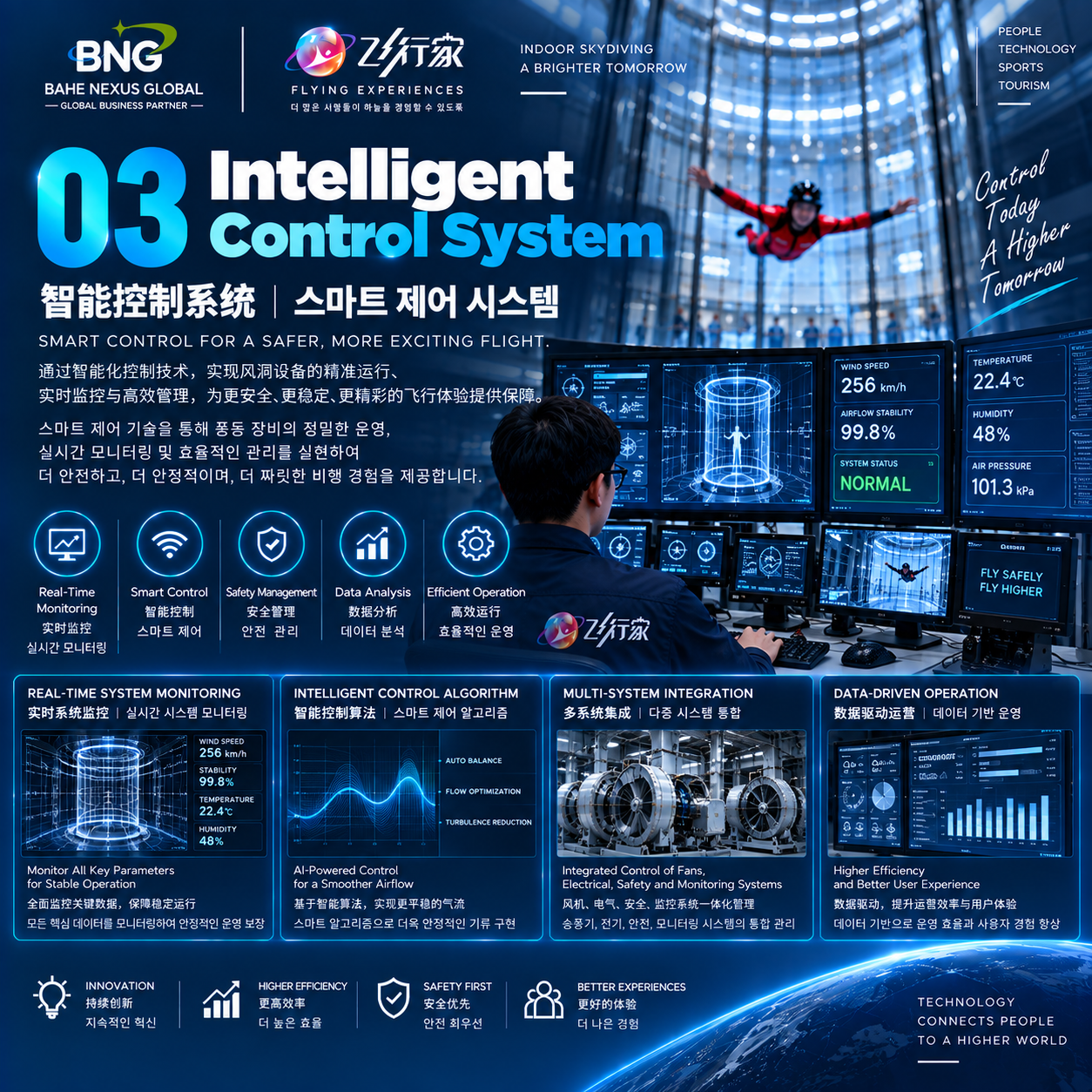
03|Intelligent Control System
Intelligent Control System · 동동プース템
Systematically manage power equipment, airflow control, and equipment operation status, enabling operators to control equipment according to different flight stages and usage needs.
Combining digital monitoring with equipment operation management, providing a more efficient technical foundation for daily commercial operations, flight experience, and professional training.
Smart Control · Real-Time Monitoring · Operational Efficiency
스마트 제어 · 실시간 모니터링 · 운영 효율
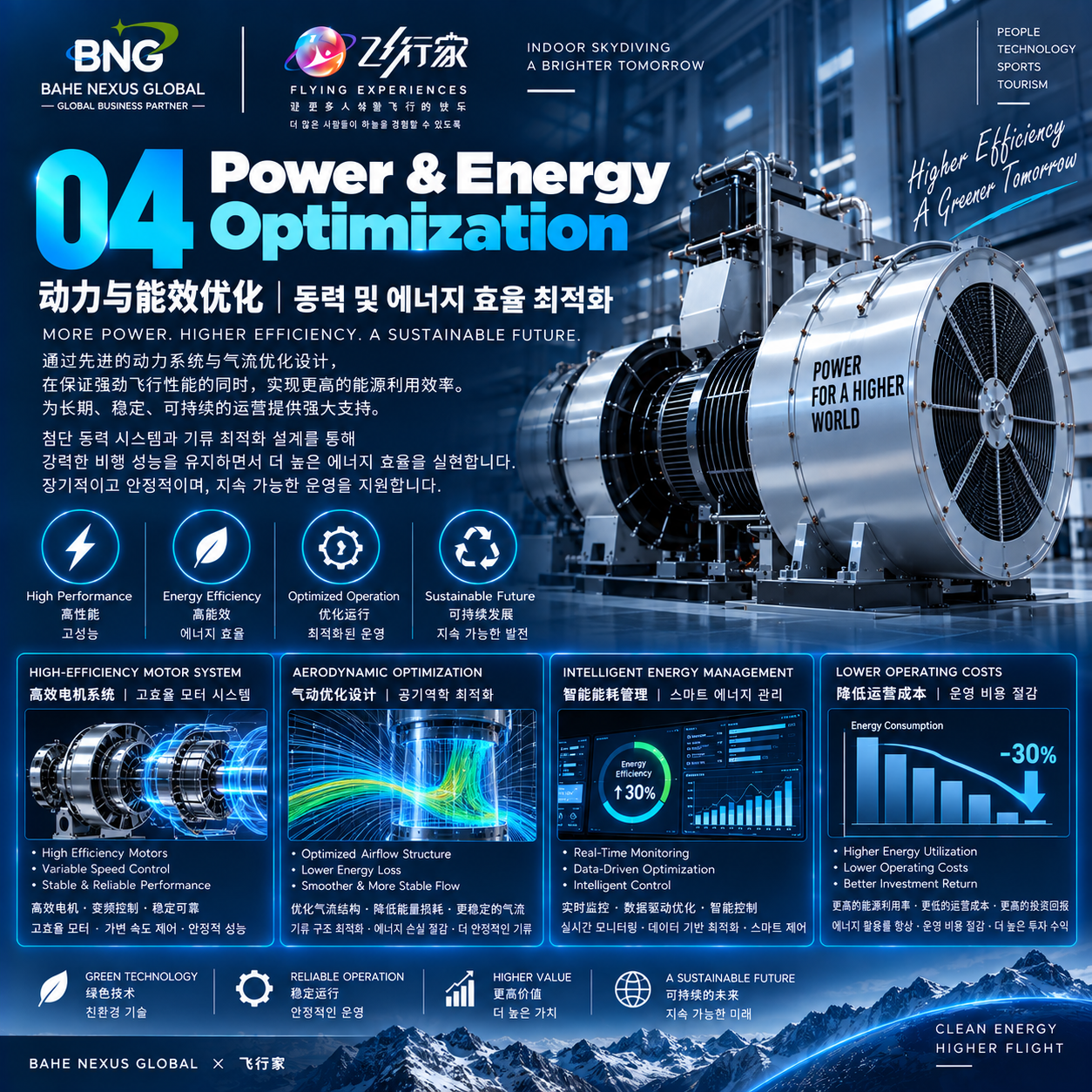
04|Power & Energy Optimization
Optimization of Power and Energy Efficiency ·동력및에너イ효율동적화
Large vertical wind tunnels require a balance between power output, airflow efficiency, and long-term operation.
Through comprehensive optimization of the power system, air duct structure, and overall system matching, the operational efficiency of the equipment is continuously improved while meeting flight performance requirements.
The pilot's own public introduction also listed energy consumption, performance, and risk control as important technical directions for the development of their wind tunnel equipment.
High Performance · Efficient Operation · Optimized Energy Use
고성능 · 효율적인 운영 · 에너지 최적화
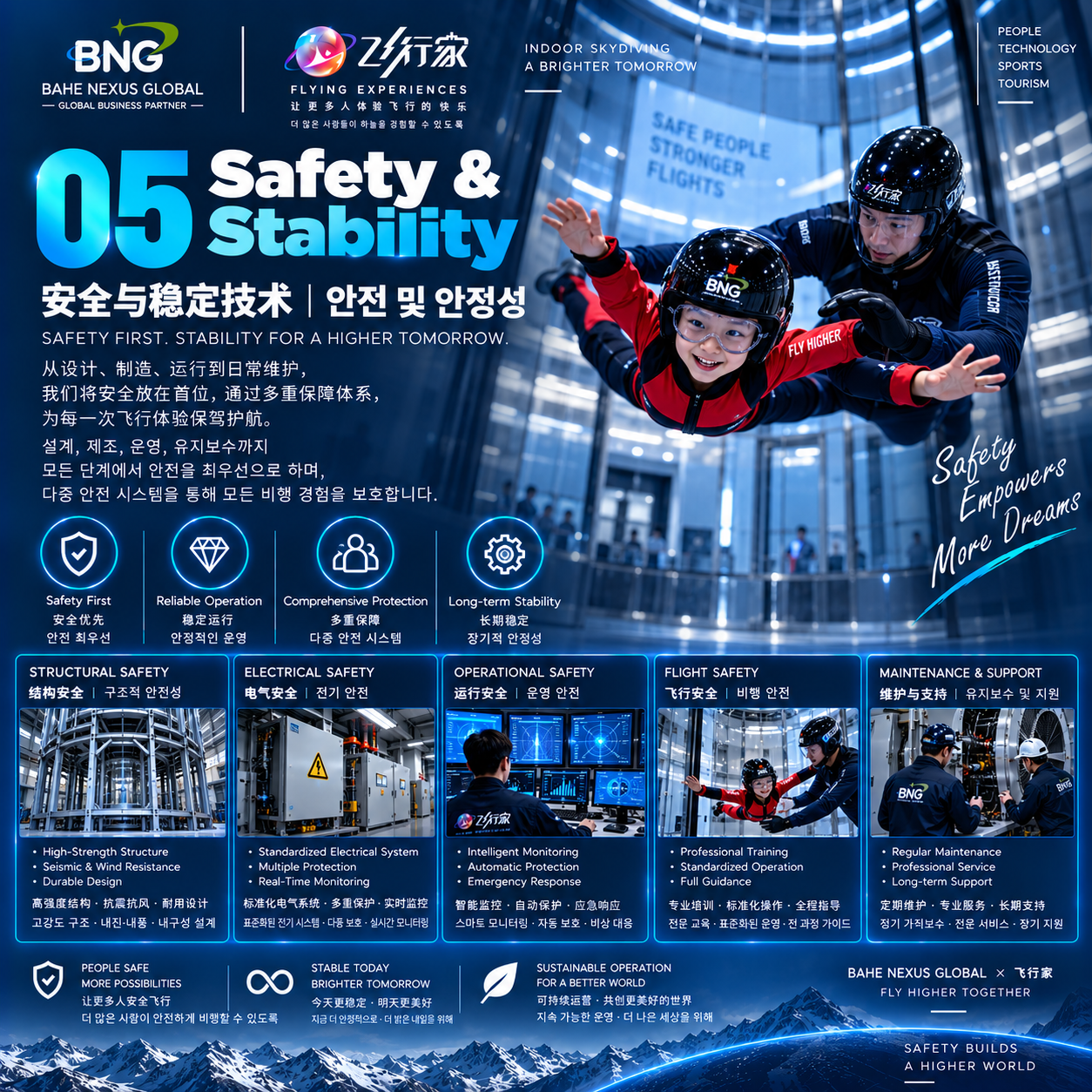
05|Safety & Stability
Security and stability technology
For commercial wind tunnels, what truly matters is not just instantaneous performance, but stability under long-term, high-frequency operating conditions.
Through multi system collaborative design, from mechanical systems, electrical systems, control systems to equipment operation monitoring, a more reliable technical foundation is established for long-term commercial operations.
Safety First · Stable Operation · Reliable Performance
안전 우선 · 안정적인 운영 · 신뢰할 수 있는 성능
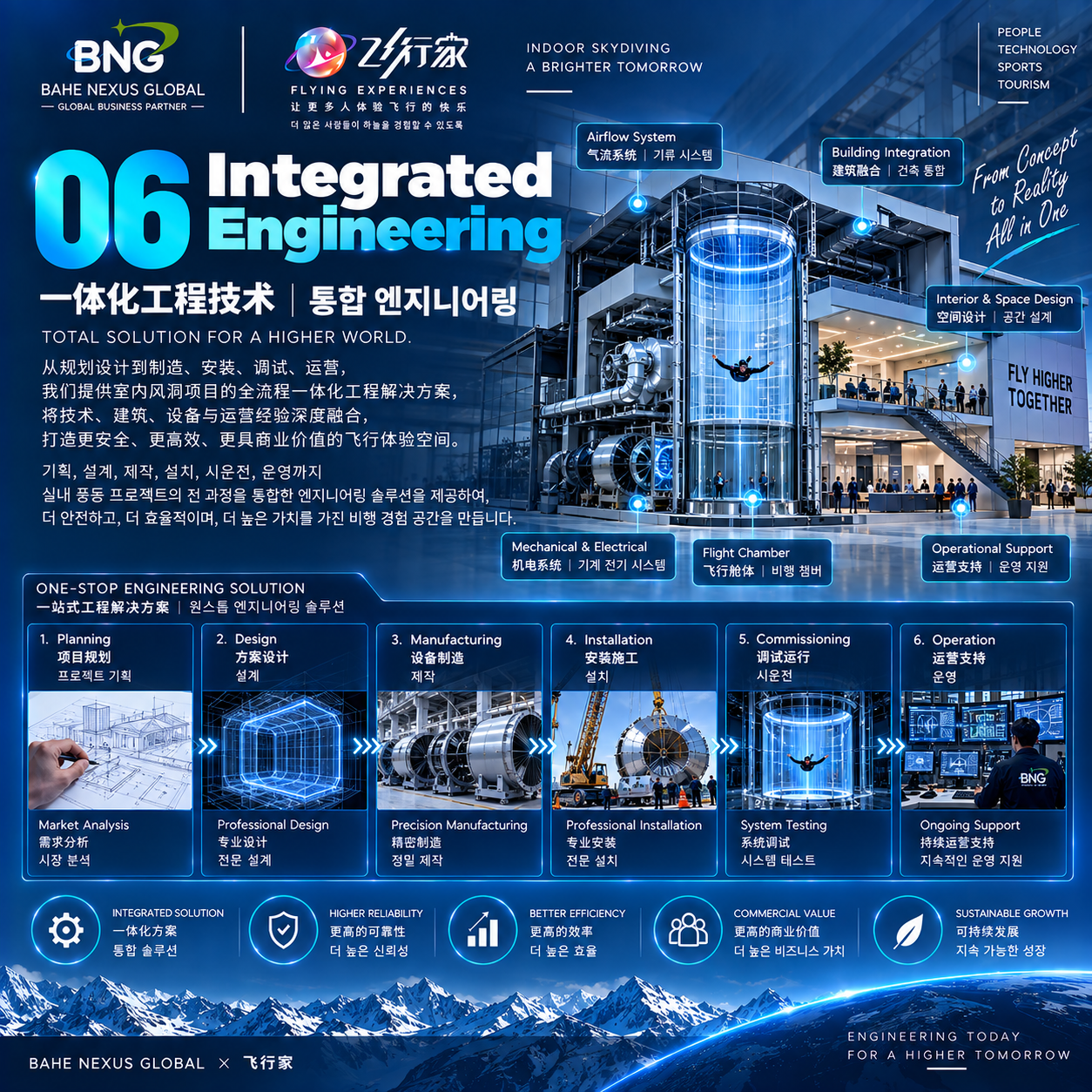
06|Integrated Engineering
Integrated Engineering Technology · 통합엔イ니ー링
A wind tunnel is not an independent device, but a comprehensive engineering system involving aerodynamics, mechanics, electrical, control, architecture, and operational space.
Therefore, starting from the project planning stage, we will comprehensively consider the wind tunnel equipment, building space, flight area, control system, tourist flow, and later operational needs.
Design → Engineering → Manufacturing → Installation → Commissioning → Operation
From design to manufacturing, from installation and commissioning to formal operation, a complete engineering technology system is formed.
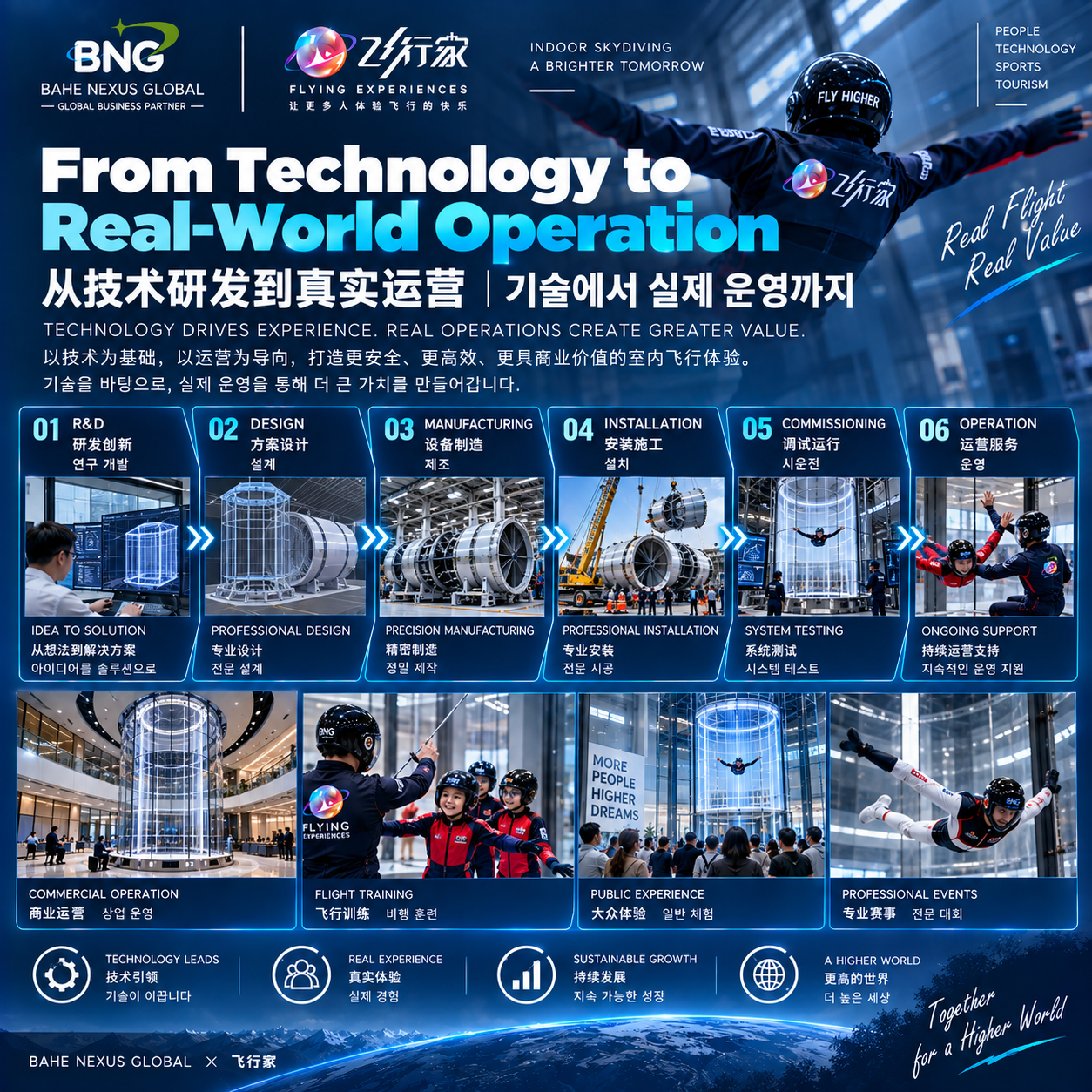
From Technology to Real-World Operation
From technical research and development to real operation
We believe that truly mature wind tunnel technology not only needs to be validated in design drawings and experimental data, but also needs to be tested through long-term commercial operations and professional flight training.
One of the characteristics of a pilot is to participate in the development and manufacturing of wind tunnel equipment, the operation of flight experience venues, and indoor/outdoor skydiving training simultaneously. This combination of "research and development+manufacturing+operation+flight" enables equipment technology to continuously receive feedback and optimization from real operating environments.
R&D + Manufacturing + Operation + Flight Experience
Technology Proven Through Real Flight.